The Combo Rental Load-In Playbook: Streamlining Multi-Asset Delivery and Setup
Pre-Deployment: The Digital Blueprint for Combo Rental Success
The biggest time sink in any complex setup isn't the physical lifting; it's the coordination gap. When a customer books a "combo rental"—say, a marquee tent, a bounce house, a generator, and a set of folding tables—they are buying a single event experience, but they are receiving a logistics puzzle. Your job, before the truck even leaves the yard, is to treat that booking like a blueprint, not a shopping list. The goal of the pre-deployment phase is to move all required information—asset specifics, site limitations, and crew assignments—from scattered emails and online forms into one central, actionable operational document. If your team is still confirming the dimensions of the generator location 30 minutes before arrival, you’ve already lost valuable time and burned goodwill.
To fix this, you need a mandatory "Combo Rental Manifest" generated immediately upon booking confirmation. This manifest must go beyond just listing assets; it needs to detail how those assets interact on site. For example, if the bounce house requires a 10-foot perimeter of clear ground, and the generator must be 20 feet from any combustible material, the manifest must flag these spatial constraints. Furthermore, use the manifest to pre-qualify the delivery window. Instead of accepting a vague "morning delivery," require the customer to confirm access points, available parking for a large trailer, and whether they have on-site power for initial setup staging. This proactive data gathering saves hours of frustrating site negotiations and ensures your crew arrives with the necessary permits and tools, not just the equipment.
Site Assessment and Logistics Mapping: The Day Zero Protocol
Before you even calculate the load-in sequence, you must understand the ground you are working on. Site assessment is not just about checking if the ground is flat enough for the tent footprint; it’s about mapping the entire operational flow for the crew. When dealing with a multi-asset combo rental, the site is not a single point of delivery; it’s a temporary construction zone that requires staged movement. The crew needs to know where the "staging area" is—the safe, flat, and accessible spot where the generator can be offloaded, the tent poles can be stacked, and the tables can be grouped—before the main assets are even unhitched.
A key tactic here is the "Reverse Load-Out Diagram." Instead of just listing the assets, draw a simple diagram on the manifest showing the ideal setup sequence. For a large event, the generator and utility hookups should be placed first, establishing the power baseline. Next, the large, heavy, and structurally critical items (like the tent frame) go in. The movable, lightweight items (tables, chairs, decorations) finish the job. This methodical approach prevents the classic scenario where the bounce house crew arrives, finds the generator blocking their required perimeter, and then has to wait for the generator crew to move it, causing a cascading delay.
Scenario Example: Consider a combo rental for a backyard wedding: Tent, Generator, Buffet Tables, and Lighting Truss. A novice crew might offload the bounce house first, leaving the generator in the middle of the lawn. A skilled crew, following the Reverse Load-Out Diagram, directs the generator to the far corner (the designated utility zone), sets up the tent frame around it, and then brings the tables in last. This structured approach turns potential conflict points into efficient, sequential tasks.
Optimizing the Load-In Sequence: The Staging Strategy
The physical act of unloading the trailer is a choreographed dance. For a combo rental, the load-in sequence must be optimized for weight distribution, accessibility, and minimizing the "touch-and-go" time for each asset. Never offload assets in the order they were loaded onto the trailer; offload them in the order they must be set up. This simple shift in thinking dramatically improves crew efficiency and safety.
To manage this, assign a dedicated "Logistics Lead" on the crew. This person is not the strongest worker; they are the most organized. Their sole job is to manage the flow from the trailer to the staging area, ensuring that the next asset is ready to move the moment the previous one is placed. They should be managing a checklist that dictates: 1) Asset Identification, 2) Offload Point, 3) Staging Area Placement, and 4) Next Asset Ready. This prevents the entire crew from standing around waiting for the next item to be identified or cleared.
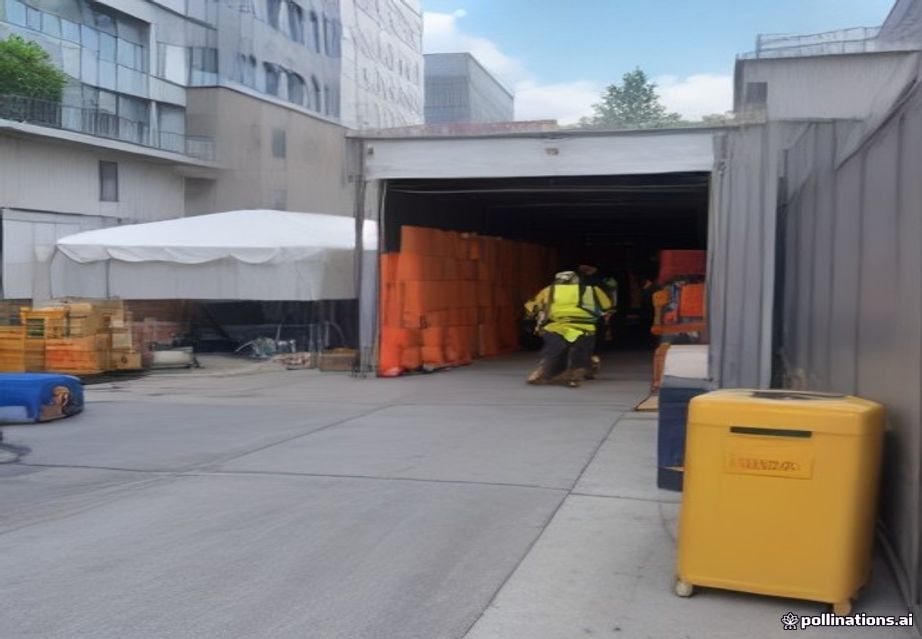
A concrete tactic to implement immediately is the "Drop Zone Protocol." When the trailer arrives, the first point of contact is not the customer; it's the designated Drop Zone. This is the safest, most accessible patch of ground, away from the event area, reserved purely for unloading and staging. This keeps the initial chaotic energy contained and allows the crew to organize the assets before the customer even sees the equipment.
Crew Deployment and Role Specialization: Beyond the General Laborer
In a combo rental situation, having a team of general laborers is insufficient. You need specialized roles, and these roles must be clearly defined before the job starts. Attempting to have one crew member set up the tent poles, operate the generator, and stack tables is inefficient and dangerous. The complexity of a combo rental demands a small team of highly specialized pods.
For instance, a five-person crew for a large event should be divided into three functional pods:
- The Utility Pod (1-2 people): Responsible for all power, plumbing, and heavy utility hookups (generator placement, extension cords, water lines). They are the masters of the infrastructure.
- The Structure Pod (1-2 people): Responsible for the main framework (tent poles, trussing, large inflatable inflation). They require precision and lifting gear knowledge.
- The Furnishing Pod (1-2 people): Responsible for the "soft goods" (tables, chairs, linens, decorative elements). They focus on layout, aesthetics, and finishing touches.
By assigning these roles, you eliminate role overlap and create clear lines of accountability. If the tent structure falls behind, the Utility Pod knows to hold off on connecting the main power feed until the structure is stable. If the tables are late, the Structure Pod knows to prioritize the tent frame. This systematic division of labor is what elevates a standard delivery to a professional, seamless setup.
Managing the On-Site Flow: Communication and Problem Solving
The most critical phase is the transition from "load-in" to "ready-for-guests." This is where the accumulated effort of the pre-planning and staging protocols must pay off. The moment the crew hits the site, the focus shifts entirely to communication. A single, designated "Site Foreman" must be empowered to make real-time decisions and communicate status updates to the customer and the crew.
The Site Foreman should use a simple, visual status board (physical or digital) to track progress against the master checklist. Instead of saying, "We are almost done," the Foreman should report: "Structure is 80% complete, Utility is 90% complete, and Furnishing is 60% complete. We anticipate completion in the next 45 minutes." This level of transparency manages customer expectations and builds trust.
Furthermore, always budget for the "Contingency Slot." Every combo rental has a variable—it's the unexpected thing. Maybe the ground is softer than anticipated, requiring extra bearers. Maybe the generator requires a specialized fuel type. Never assume the plan will be perfect. Dedicate 30 minutes in your schedule specifically for troubleshooting, minor adjustments, and quality checks. This buffer prevents the entire schedule from collapsing when a minor obstacle arises.
Post-Setup Protocol and Load-Out Efficiency
The complexity of the load-in process must be mirrored by an equally structured load-out process. Nothing frustrates a client more than a chaotic, slow tear-down. The end of the job is just as important as the beginning because it dictates the client’s final impression of your professionalism. The load-out must be treated as the reverse of the load-in, following the same staged logic.
The key principle here is the "Reverse Staging." As the crew deconstructs the event, they should not simply pile everything back onto the trailer. Instead, they should deconstruct in reverse order of setup, which keeps the assets organized and ready for transport. The furnishing pod should remove tables and linens first, followed by the structure, and finally, the utility pod removes the generator and power feeds.
Before the last asset is loaded, the Site Foreman must conduct a final, comprehensive walk-through with the client. This walk-through is not just for checking for damage; it’s for confirming the removal of all debris, cables, and staging materials. The client should leave the site feeling that the space has been returned to its original state—or better. This meticulous final step solidifies your reputation for reliability and efficiency.
Mastering the combo rental load-in process is about institutionalizing these protocols: treating the booking as a logistical puzzle, defining specialized roles, and maintaining crystal-clear communication from the first minute to the last.
To streamline these complex operations, explore the tools available through https://demo.partyrentalcommand.com/.
When your process is this detailed, your crew operates with confidence, and your clients feel like they are dealing with a single, highly competent service provider.
Start implementing a mandatory Combo Rental Manifest today.
Ready to turn searches into booked jobs?
Websites and booking systems built only for party rental companies.