The Operator's Guide to Liability: Managing Risk in Complex Combo Rental Setups
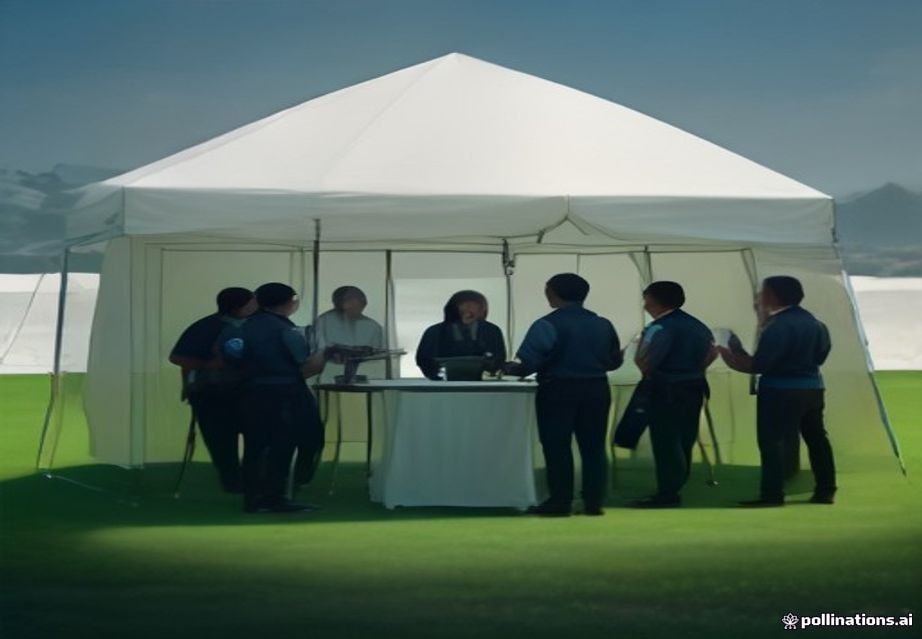
Moving Beyond the Checklist: Structuring Liability for Complex Combo Rentals
When you’re running a simple single-item rental—say, just a standard 10x10 canopy—your liability risk is relatively predictable. You know the failure points: anchoring, weather, setup crew safety. But the moment you move into a "combo rental"—a setup that includes a bounce house, a waterslide, a DJ booth, and a decorative tent—you aren't just renting equipment; you are creating a temporary, complex event ecosystem. The risk profile shifts from simple equipment failure to systemic operational failure. Your liability isn't just about the bounce house tipping over; it's about the interaction between the slick waterslide surface, the crowd density near the DJ booth, and the wind stress on the tent structure all happening at the same time. To protect your bottom line and your crew, you must treat the combo rental not as a collection of items, but as a single, interconnected, high-risk operational unit.
The first thing you can do today to reduce your exposure is to stop treating the contract and the setup checklist as separate documents. They must be merged into a single, cohesive Risk Management Plan (RMP). This RMP needs to be reviewed by a manager or owner who is not the person who took the booking call. The person who sells the combo package is focused on maximizing revenue; the person reviewing the RMP must be focused exclusively on mitigating catastrophic loss. This separation of duties is critical. You need a dedicated, objective third set of eyes to spot the operational gaps that the sales team, blinded by the excitement of the package, will naturally overlook.
The Pre-Booking Risk Audit: Identifying Red Flags Before the Contract is Signed
The true work of risk management starts long before you send out a quote. It starts when the customer calls and asks, "What do you have for a big birthday party?" Your job in this initial conversation is not to sell; it is to qualify the risk. You must become an expert in assessing the suitability of the site for the requested equipment, and you must be prepared to walk away if the risk is too high. Never feel obligated to accept a booking just because the customer is polite or because the equipment is profitable.
A comprehensive pre-booking audit requires asking questions that force the customer to confront the practical limitations of their location. These questions should go far beyond "Is it level?" You need to know about power access (is it dedicated, industrial grade, or shared from a residential circuit?), the ground composition (is it asphalt, compacted gravel, or soft clay?), and the surrounding environment (are there overhead power lines, mature trees, or known drainage issues?). If the client is vague, you must insist on photographic evidence or, ideally, a mandatory site visit. If they refuse, you must document that refusal and make it a non-negotiable condition of the contract.
Concrete Scenario: A client calls requesting a combo rental, including a large inflatable slide and a tent. They state the setup will be in their backyard. Before quoting, you ask: "Can you confirm the power source for the slide's blower? Is it a dedicated 20-amp line, or are you relying on an extension cord from your garage?" If they say, "Oh, it'll be fine," you respond: "For insurance purposes, we require confirmation from a licensed electrician that the circuit can handle the load. If we cannot verify that, we cannot proceed with the slide." This single line of resistance, backed by your insurance policy knowledge, protects you from an electrical fire claim down the line.
Structuring the Documentation Stack: Beyond the Standard Waiver
The waiver is often treated as a necessary evil—a piece of paper to be signed and filed away. This is a dangerous misconception. A waiver is not a shield; it is evidence of informed consent. It must be a highly detailed, layered document that explicitly addresses the unique risks of the specific combo package being deployed. Generic waivers signed for a single bouncy house are insufficient when you are mixing water, electricity, heavy structures, and large crowds.
When drafting or selecting your waiver template, you must ensure it addresses four key areas: Assumption of Risk, Indemnity, Exclusion of Damages, and Specific Operational Instructions. The Assumption of Risk section must explicitly mention the inherent dangers of interacting equipment. For example, it shouldn't just say "participants assume risk." It must say: "Participants assume risk of entanglement, slip-and-fall injuries, and impact injuries resulting from the interaction between the inflatable slide and the adjacent tent structure."
Furthermore, the contract must clearly outline the client's responsibilities, not just the renter's. This includes mandatory rules regarding site preparation, ensuring clear ingress/egress paths, and the designated point of contact on the day of the event who is responsible for enforcing safety rules. If the client fails to meet a site requirement (like clearing debris or ensuring the power source is ready), that failure must be documented as a breach of contract, which can void your liability coverage for that specific failure point.
Site-Specific Operational Due Diligence: The Mandatory Day-Before Walkthrough
The booking is done. The contract is signed. The equipment is prepped. Now comes the critical phase that most operators rush through: the site walkthrough. Do not skip this step, even if the client promises everything is perfect. The day-before visit is your final, physical opportunity to audit the site and mitigate risks that only become visible when you are standing on the ground.
Your checklist must be comprehensive and must include assessing the site for environmental stressors. Look for drainage patterns—where will rainwater pool, and how might that compromise the anchoring points? Check for utility access points that are not obvious, such as buried sprinkler lines or septic fields that could be damaged by heavy equipment. You are looking for the worst-case scenario, not the best-case.
Concrete Scenario: You are setting up a combo package, and during your day-before walkthrough, you notice that while the main lawn area looks fine, the corner where the waterslide is slated to go is adjacent to a slight downhill slope and a patch of old, patchy grass. You immediately flag this. You don't just say, "It might be slippery." You state: "Due to the grade change and potential for runoff, we must install additional non-slip matting and restrict the waterslide usage zone to the flat, compacted area. We will need to adjust the flow path slightly to compensate for the slope." This proactive adjustment prevents a catastrophic slip-and-fall claim that would have originated from a seemingly minor grade change.
On-Site Setup and Inspection Protocols: The Crew's Final Sign-Off
The setup day is high-stress. The crew is tired, the sun is hot, and the client is expecting magic. This is when procedure tends to degrade. To combat this, you must implement a mandatory, structured, multi-point inspection protocol that requires sign-off from at least two different crew members. This is not just about checking the blower motor; it's about checking the interaction points.
The inspection protocol must be sequential and methodical. Do not simply check the equipment; check the interface between the equipment and the ground, and the interface between the equipment and the environment. For example, when anchoring the tent, the crew must inspect the ground around the anchors to ensure no debris (rocks, sticks, etc.) has been placed that could compromise the anchor's pull-out strength.
When the setup is complete, the crew leader must conduct a final walkthrough with a designated representative (often the client or a site manager). This walkthrough is not a casual tour; it is a formal, step-by-step safety briefing. The crew leader must verbally point out the "rules of engagement"—e.g., "The waterslide is wet, so no running," and "The tent entrance is the only way in." Documenting this final verbal briefing, and having the client sign a receipt acknowledging the completion of the safety briefing, adds a powerful layer of protection to your records.
Managing Interacting Equipment: The Combo Rental Sweet Spot of Risk
The biggest liability blind spot in the industry is the concept of the "combo rental." When you combine items—say, a dunk tank, a bouncy house, and a table/chair area—you are creating unpredictable vectors of risk. The bouncy house crowd, energized and moving erratically, might interact with the edge of the table, knocking over a drink, or the waterslide might dump water onto the power extension cord area. These interactions are often what leads to the most severe claims.
To manage this, you must physically zone the area and define the rules of interaction. Use temporary barriers, caution tape, or even physical fencing to create clear, non-negotiable boundaries between different types of activities. If the waterslide ends at the edge of the lawn, and the bouncy house is set up ten feet away, you must establish a clear, physical buffer zone (e.g., a line of caution tape and a warning sign) that prohibits participants from crossing between the two zones.
Furthermore, you must consider the cumulative effect of the environment. If the setup involves a water element (the waterslide or dunk tank), you must treat the entire immediate area as a wet surface, regardless of the weather forecast. This dictates changes in everything from the required footwear of your crew to the type of matting you deploy. This detailed, zone-by-zone risk assessment is what separates a professional, insured operator from a casual vendor.
Incident Response and Post-Event Protocol: Controlling the Narrative
The worst day for a rental company is the day an incident occurs. Your immediate, on-site response is critical because it controls the narrative, which is what ultimately impacts your insurance claims and your reputation. When an incident happens, the operator's first priority must be safety and control, not investigation or cleanup.
Step 1: Secure the Scene. Immediately halt all activity in the affected zone. Do not allow anyone to move the equipment or disturb the immediate area. The scene must be preserved exactly as it was found. Step 2: Triage and First Aid. Focus solely on the injured party. Implement immediate, professional first aid protocols. Get professional medical help called out immediately. Step 3: Documentation and Witness Collection. Once the scene is stable, designate one person to take detailed photographs and videos of the incident site before anything is touched. Collect names, phone numbers, and statements from all witnesses immediately.
Crucially, the person who manages the scene must be trained in crisis communication. They should be trained to speak only in facts: "The slide was wet," not "The slide was really slippery because of the rain." They must avoid assigning blame or speculating on causes. All statements should be recorded and signed, and the process must be repeated consistently. This disciplined approach ensures that when the insurance adjusters arrive, you present a unified, factual, and controlled account of events.
When you are structuring your operational procedures, integrating modern tools for client communication and booking management is essential. Reviewing how you manage your online bookings and client communications can help solidify these processes. For example, platforms like https://demo.partyrentalcommand.com/ allow operators to centralize all these complex operational details, ensuring that the sales team, the setup crew, and the management team are all working from the same, comprehensive risk profile.
Mastering the liability aspect of combo rentals is not about buying more insurance; it's about implementing superior operational discipline.
Adopt a mandatory, multi-layered risk assessment protocol for every single booking that involves more than two distinct types of equipment.
Ready to turn searches into booked jobs?
Websites and booking systems built only for party rental companies.